
Against the Tide: How Photographer Polly Braden is Redefining Youth Across the Coast
For over a decade, a pervasive and unfair narrative has hovered over the younger generation. In the media and across political talking points, societal shortcomings are too often blamed on the youth. But for Gen-Z growing up in the UK’s coastal communities, this narrative isn’t just false—it completely ignores the reality of their lived experiences.
Having navigated the isolation of Covid-19 only to see local youth services stripped away and public spaces restricted, these young people are facing an infrastructure crisis. In many coastal towns, options for moving away or building a career are scarce, yet when young people try to find alternative spaces to simply gather and exist—even somewhere as ordinary as a local McDonald’s—they are frequently met with suspicion or anti-social behaviour labels.
Photographer Polly Braden set out to pivot that lens entirely with her collaborative documentary project, Against the Tide. Instead of pointing a spotlight at these teenagers as the problem, Against the Tide uses creative storytelling to expose the structural issues facing their towns—from housing shortages to underfunded transport—and celebrate the immense resilience of the individuals navigating them.
Listening First, Cameras Second
If you want to tell an authentic story, you can’t just jump into a community, snap a quick picture for a headline, and leave. True collaboration requires time, deep listening, and trust.
Supported by funding from Arts Council England, Braden deliberately built a slower, community-first approach into her process for Against the Tide. In Tendring, for example, she partnered with Teen Talk—an organization supporting young people who are out of work and at risk of losing their housing. Many of the participants had become profoundly isolated during the pandemic.
To build genuine trust, Braden kept her camera firmly in its bag for the first six weeks. Instead, she spent that time showing up week after week, sitting down, and letting the young people teach her their favorite card and board games.
“Where can you congregate? Where can you feel safe, where can your parents feel you’re safe, and where you can just get on and be?” Braden asks, highlighting the lack of public spaces for youth. “There is a real lack of spaces for them.”
Similarly, a visit to Blackpool highlighted just how deeply young people feel the weight of national press stereotypes. During a creative exchange lecture, a local student looked up and asked a question that re-centered the entire mission of the project: “If people keep thinking about our town in a certain way, how are we meant to feel good about ourselves?”
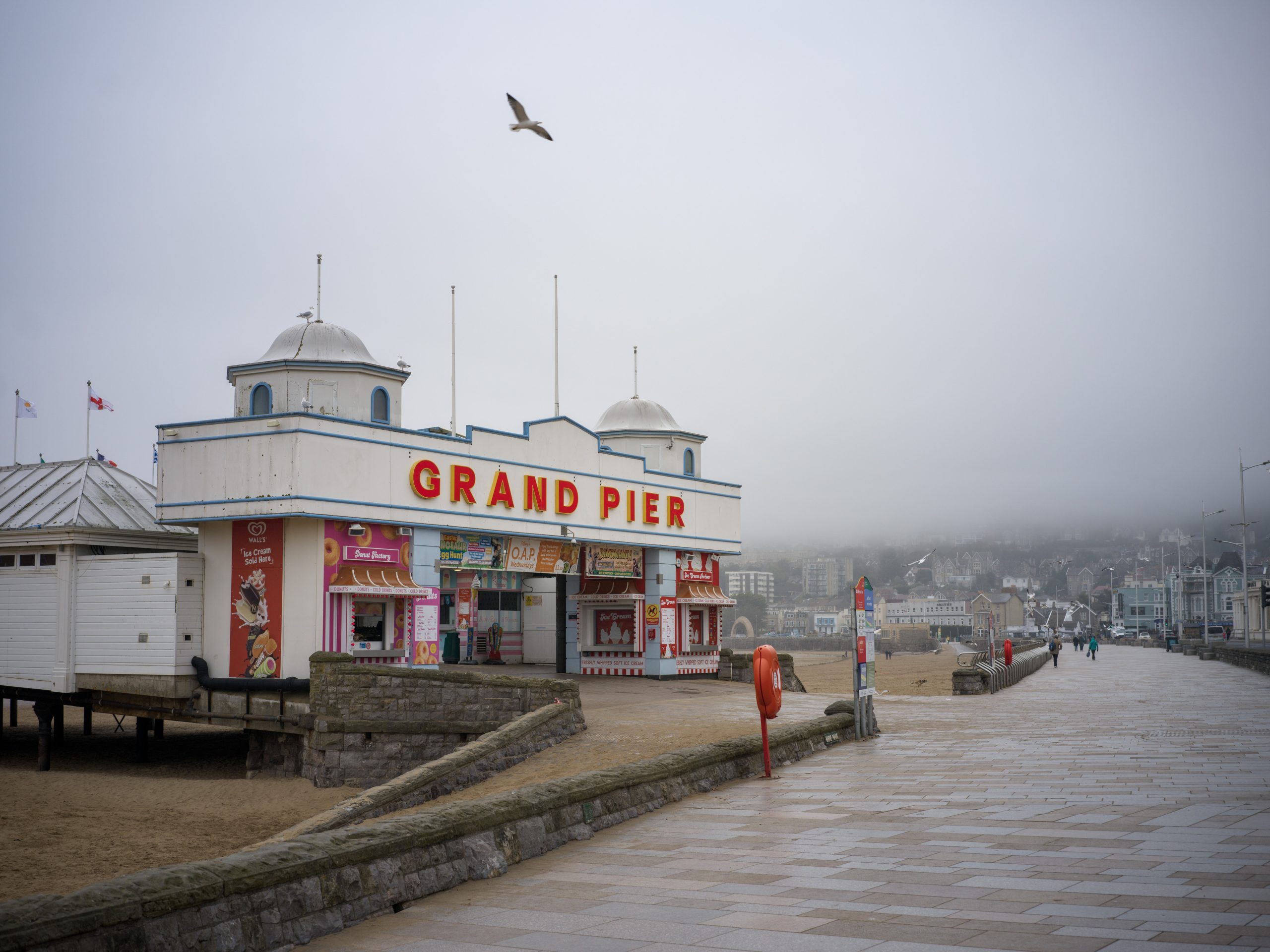
From that moment on, the goal of Against the Tide was clear: find inspiring, resilient young people across hubs like Blackpool, Whitehaven, Tendring, and Weston-super-Mare, and help them tell stories of what success looks like on their own terms.
“In each town, we built in time to go and listen,” Braden notes, underscoring the deep commitment required for the project. “It makes a massive difference if you’re trying to go into communities and not just jump in, take a photo, and jump out.”
Power of the Postcard: Handing Over Control
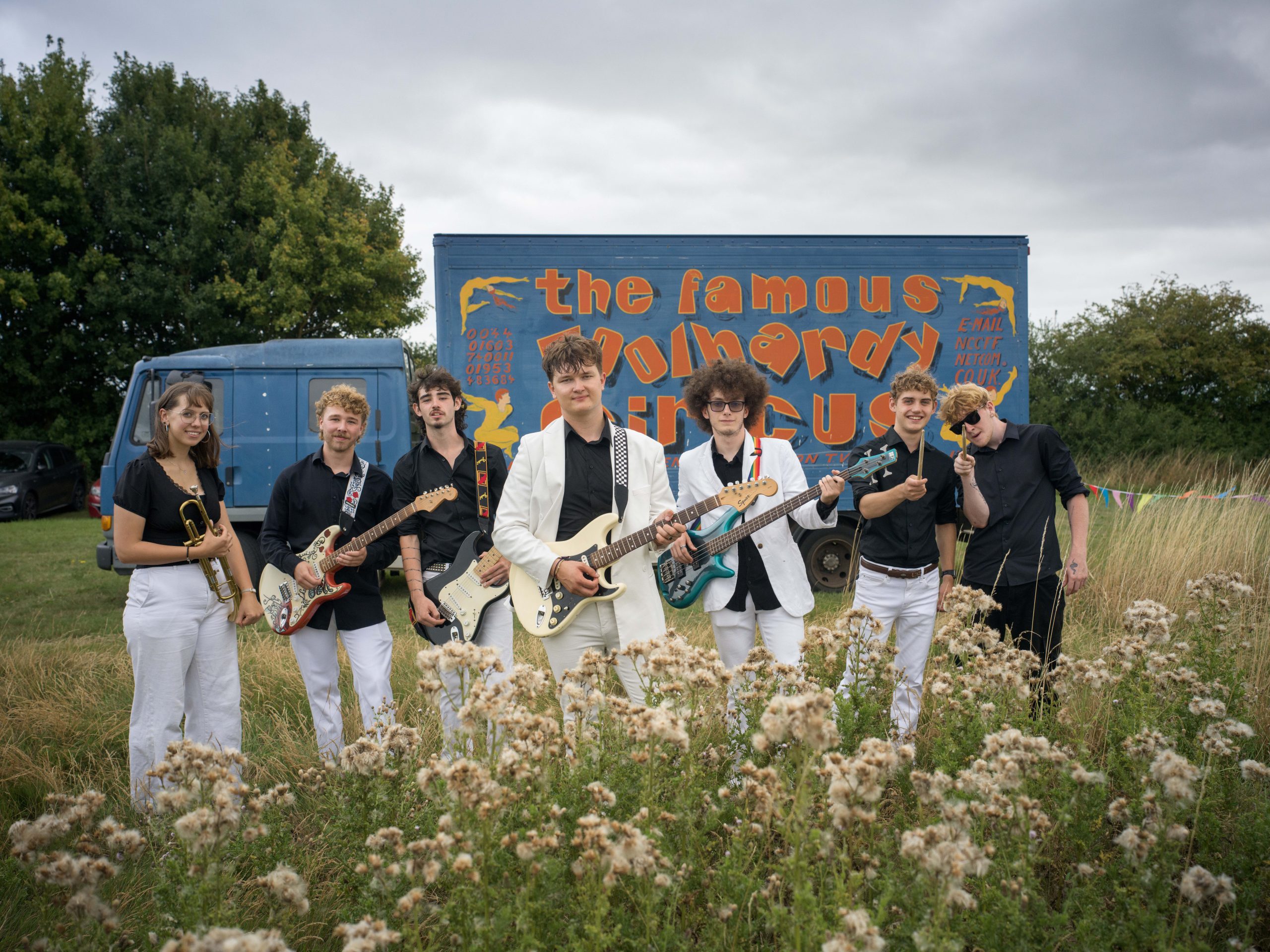
A major element of empowering the participants was ensuring they felt like active co-creators rather than passive subjects. To bridge the geographic isolation between these different coastal areas, Braden established a nationwide postcard exchange as part of the project.
Working with professional writers to keep the tone casual and unstilted, youth groups from Tendring and Whitehaven to Blackpool and Weston-Super-Mare began writing to one another. What started as tentative, nervous messages quickly bloomed into a massive wave of connection.
In Whitehaven, youth leaders watched the kids pull out maps to eagerly pinpoint exactly where their new pen-pals lived.
“They loved being able to speak to peers across the country they wouldn’t normally cross paths with. It helped them feel like active collaborators on a project rather than just subjects under a spotlight.”
It created a tangible, cross-country community.
Staging Stories: Libby and the Oranges
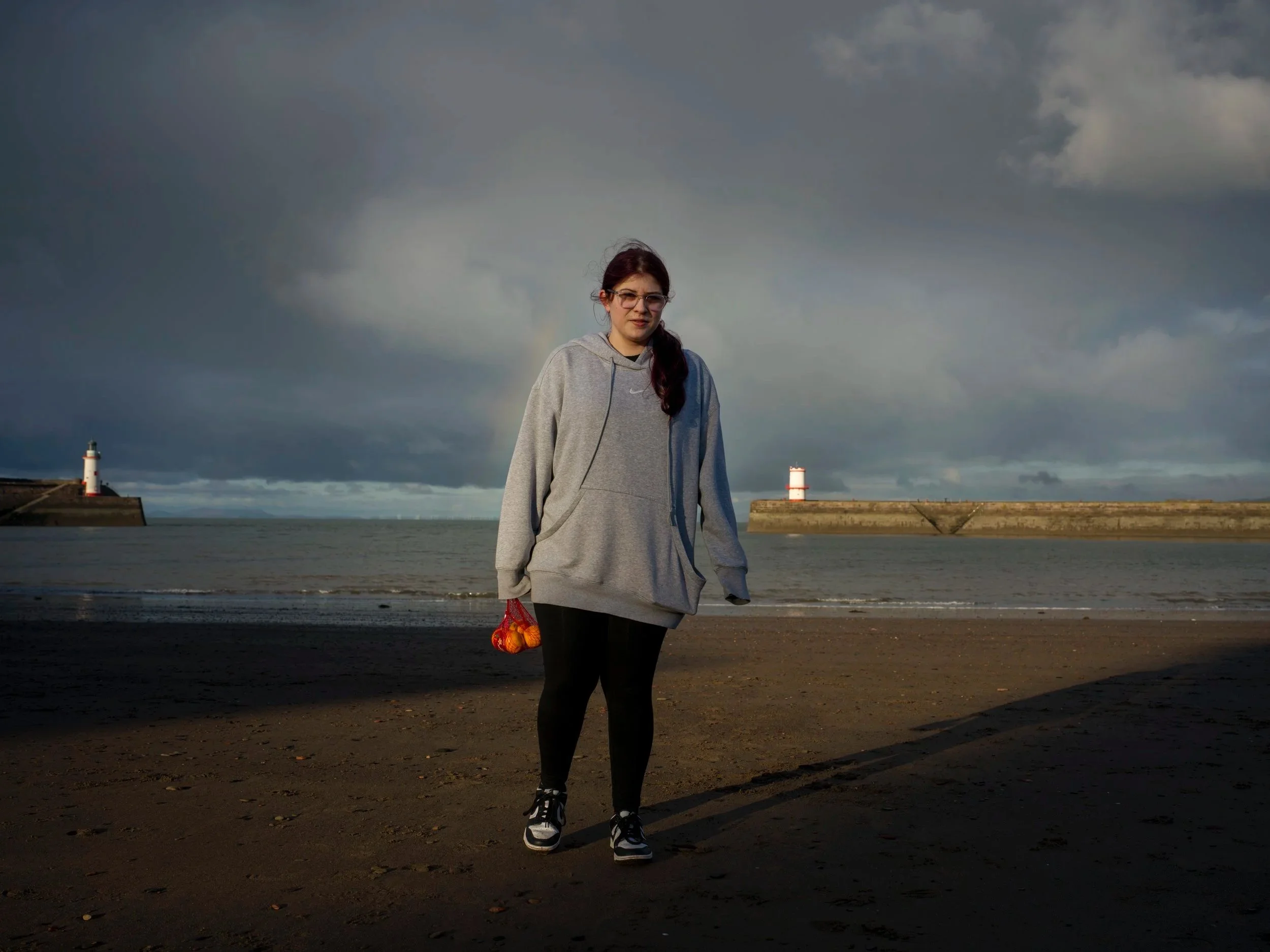
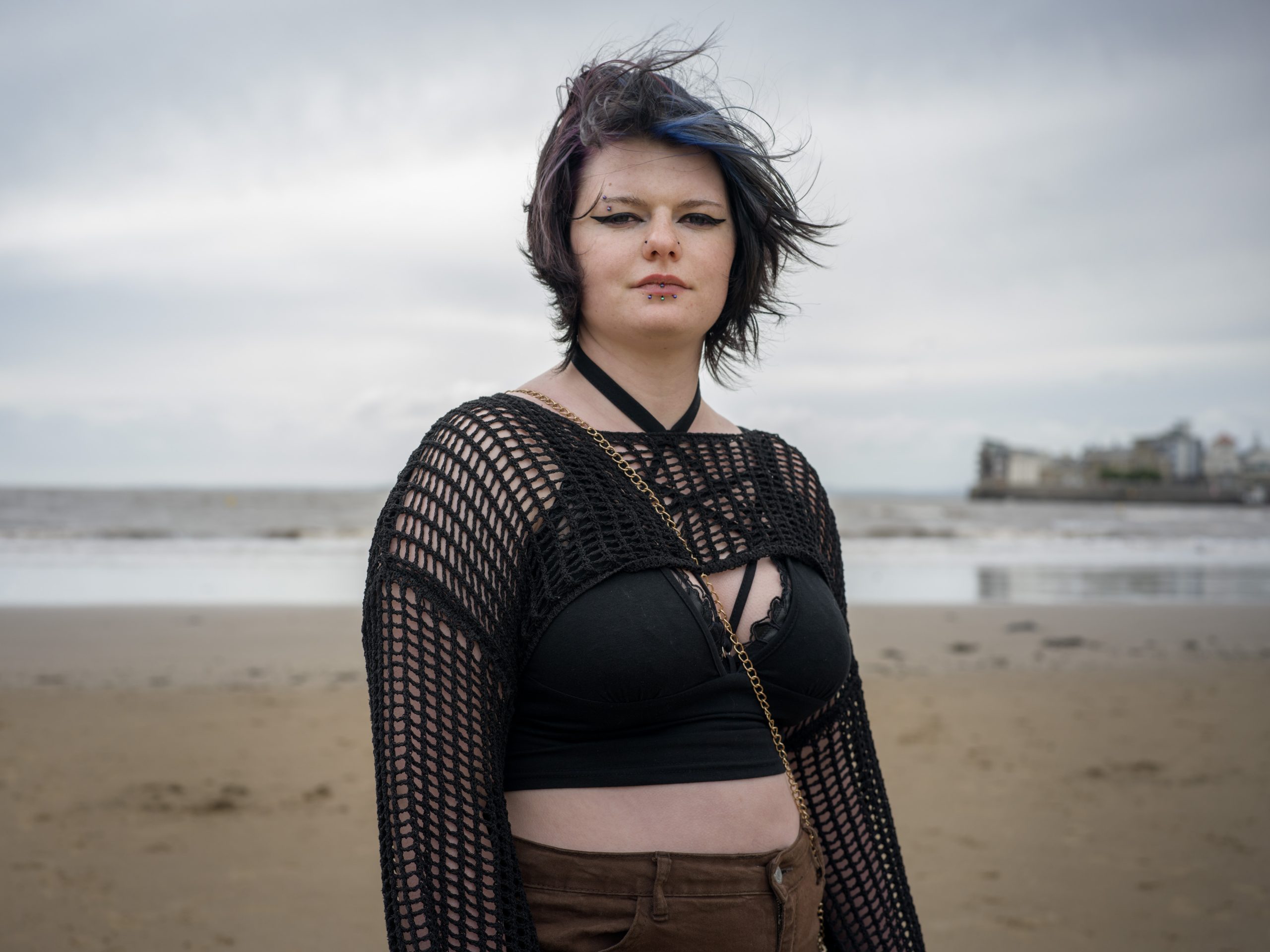
One particular portrait—which became a central feature of the project’s coverage in The Guardian—perfectly encapsulates this collaborative spirit. Shot on the beach in Whitehaven, it features a young woman named Libby holding a bag of fresh oranges.
“Libby was incredibly engaged in the process of staging the image, collaborating on creating a visual narrative that felt entirely her own. She really enjoyed the process of making the image, collaborating on this thing we were creating together,” Braden recalls warmly. “If you look closely, there is a tiny, bright rainbow that sort of comes out over her shoulder—it’s only just visible. There’s just something beautiful about the beach and the light that day.”
Taking the Coast to Westminster
The ultimate culmination of Against the Tide wasn’t just hanging prints on a gallery wall; it was bringing the raw reality of coastal youth directly to the ears of lawmakers.
After initial advocacy meetings with the All-Party Parliamentary Group for Coastal Communities and researchers from UCL, politicians Polly Billington and Alison Hume invited Braden to bring the young people to Parliament to speak for themselves.
In a massive logistical effort alongside the Coastal Navigation Network (CNN), Braden and Lisa from The Guardian brought sixteen young people from these coastal towns straight into the heart of Westminster. The maturity the youth displayed was staggering. Anna, a young woman from Whitehaven, spent the weeks leading up to the trip interviewing other teenagers in her neighborhood, making sure she was carrying the collective struggles of her peers to London, not just her own.
Stepping into those historic, grand parliamentary rooms is intimidating for anyone, let alone a teenager. Yet, they took their places around a massive, formal oval table and spoke with immense eloquence.
“The first time I was in there, I was incredibly nervous to speak to politicians,” Braden admits. “But they were brilliant… and all of them spoke about what they thought politicians should know about their towns.”
They didn’t shy away from the heavy topics. They spoke directly about:
- The Housing Crisis: The lack of secure, affordable options for young renters locally.
- Broken Transport: How isolated bus and train networks cut them off from jobs and education.
- The Shadow of Addiction: Participants spoke passionately about how underfunded adult rehabilitation systems create unsafe high streets, directly impacting the well-being of the younger generation growing up around them.
From the Fringes to the Gallery Floor: Exhibition at Arnolfini
This summer, Braden’s expansive year-long project arrives in Bristol. Running from 27 June to 27 September 2026 at Arnolfini, Against the Tide transforms the ground floor galleries into a space of active narrative and profound connection.
Led by Braden in partnership with journalist Lisa Bachelor as part of The Guardian’s Seascape series, the exhibition expands its lens to look at the wider reality of coastal Britain today—weaving together stories from places like Blackpool, Tendring, Whitehaven, and Weston-super-Mare, alongside Scarborough, Grimsby, Cornwall, Southend, and Portsmouth.
Bringing together photography, film, and first-hand testimonies, the free exhibition avoids traditional, blanket narratives of passive “coastal decline.” Instead, it creates an ongoing conversation between the environments these 16–25-year-olds inhabit and their personal aspirations. Visitors are brought face-to-face with a generation acutely aware of the hard-hitting research proving that coastal upbringing limits structural opportunity, yet who counter that inequality with fierce expressions of ambition, music, skate culture, and community.
Crucially, the exhibition marks the moment the young participants themselves travel across the country to finally meet in person, seeing their collaborative work side-by-side. Following its three-month run at Arnolfini, the touring exhibition will move to Firstsite in Colchester this October.
Looking Forward
Decades ago, these coastal towns thrived with vibrant music scenes, active youth clubs, and accessible social hubs. Today, that evening economy and cultural infrastructure have largely vanished, leaving those reaching adulthood with nowhere to go.
Braden emphasizes that Against the Tide was never about romanticizing hardship. It was about showing that our coastal youth do not lack potential; they lack support.
“The whole point of the project was to raise the voices of these young people and shine a light on the structural issues they face,” Braden says. “So we stop pointing the spotlight at them as the problem, and start putting the spotlight on the lack of infrastructure, education, available jobs, and the housing crisis… to show that they need more support.”
By shifting the spotlight away from individual blame and focusing it squarely on systemic failures, Braden hopes policymakers will finally give these creative, resilient young communities the infrastructure and investment they so richly deserve.